Compact High Gain 5.8 GHz Antenna
Flat circular polarized antenna engineered for long-range UAV communications, FPV drone systems, repeaters and ground station deployments. Right-hand circular polarization with 19 dBi gain in a 220 × 220 mm form factor.
Every design decision in the EGLE-64C-R is driven by the requirements of real-world UAV and long-range communication deployments.
Focused radiation pattern extends communication range by concentrating RF energy in the main beam direction, without increasing transmitter power. A larger 64-element array delivers 5 dB more gain than the compact EGLE-16C-1R — critical for maximum link budget over long distances.
Right-hand circular polarization ensures reliable signal reception regardless of antenna orientation. Eliminates polarization mismatch loss inherent in linear polarized systems — essential for rotating UAV platforms.
1.2 GHz operating bandwidth covers the entire 5.8 GHz ISM band and beyond. Full coverage for FPV video links, RC control, WiFi 5 and emerging 6 GHz applications within a single antenna.
Circular polarization inherently attenuates reflected signals that undergo polarization reversal on reflection. Combined with the narrow 11.2° beam, this significantly reduces multipath distortion in cluttered RF environments.
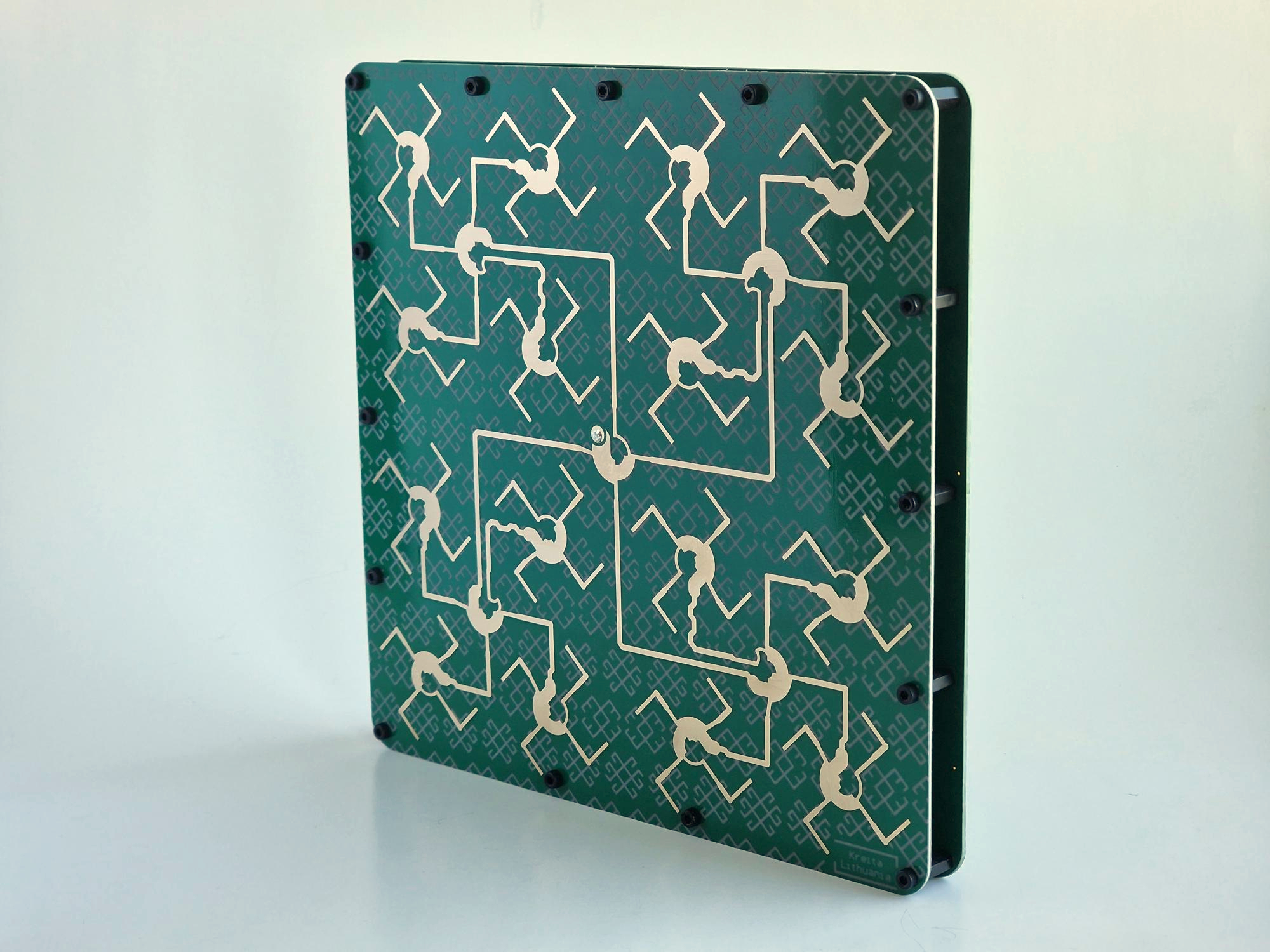
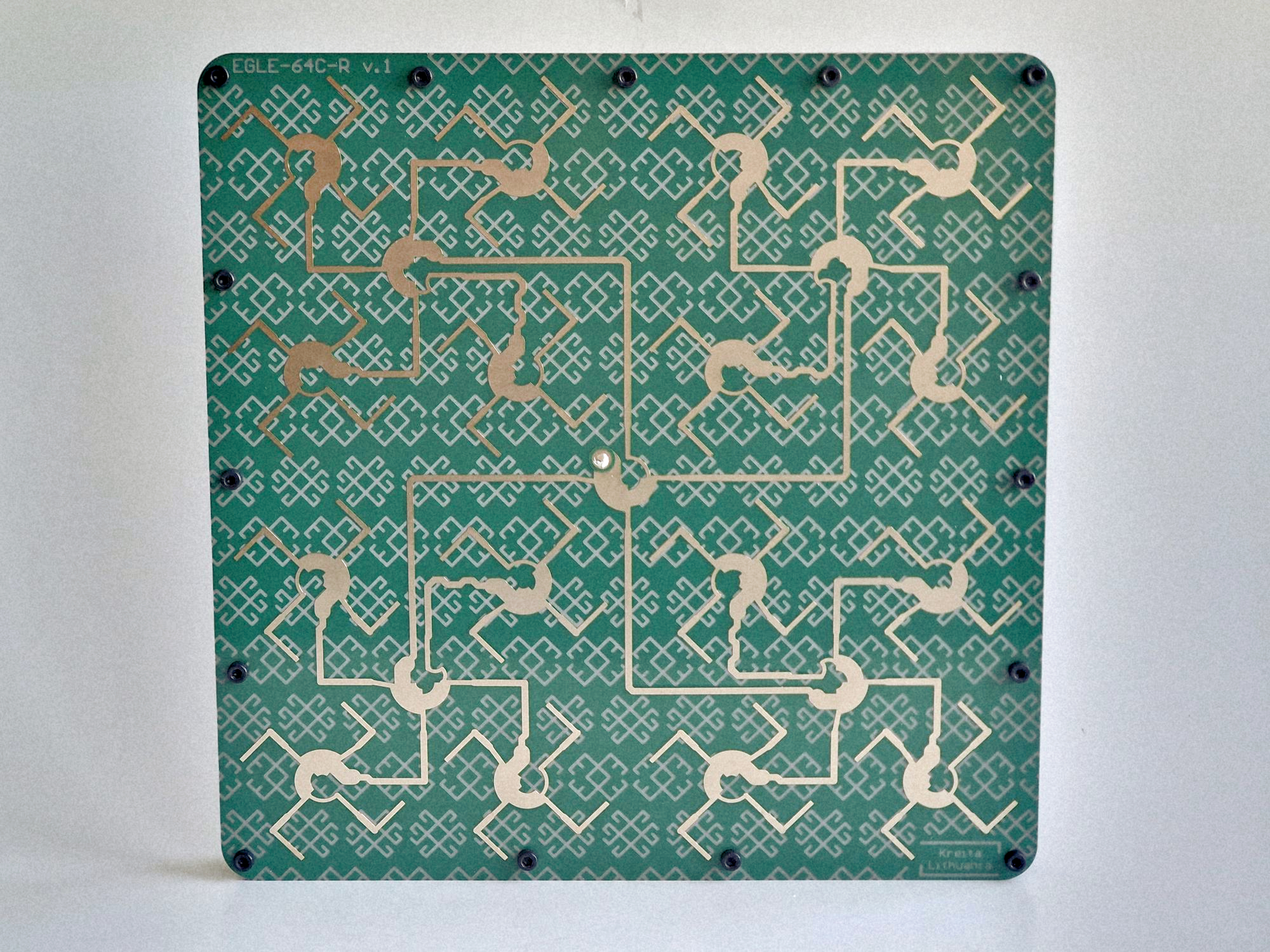
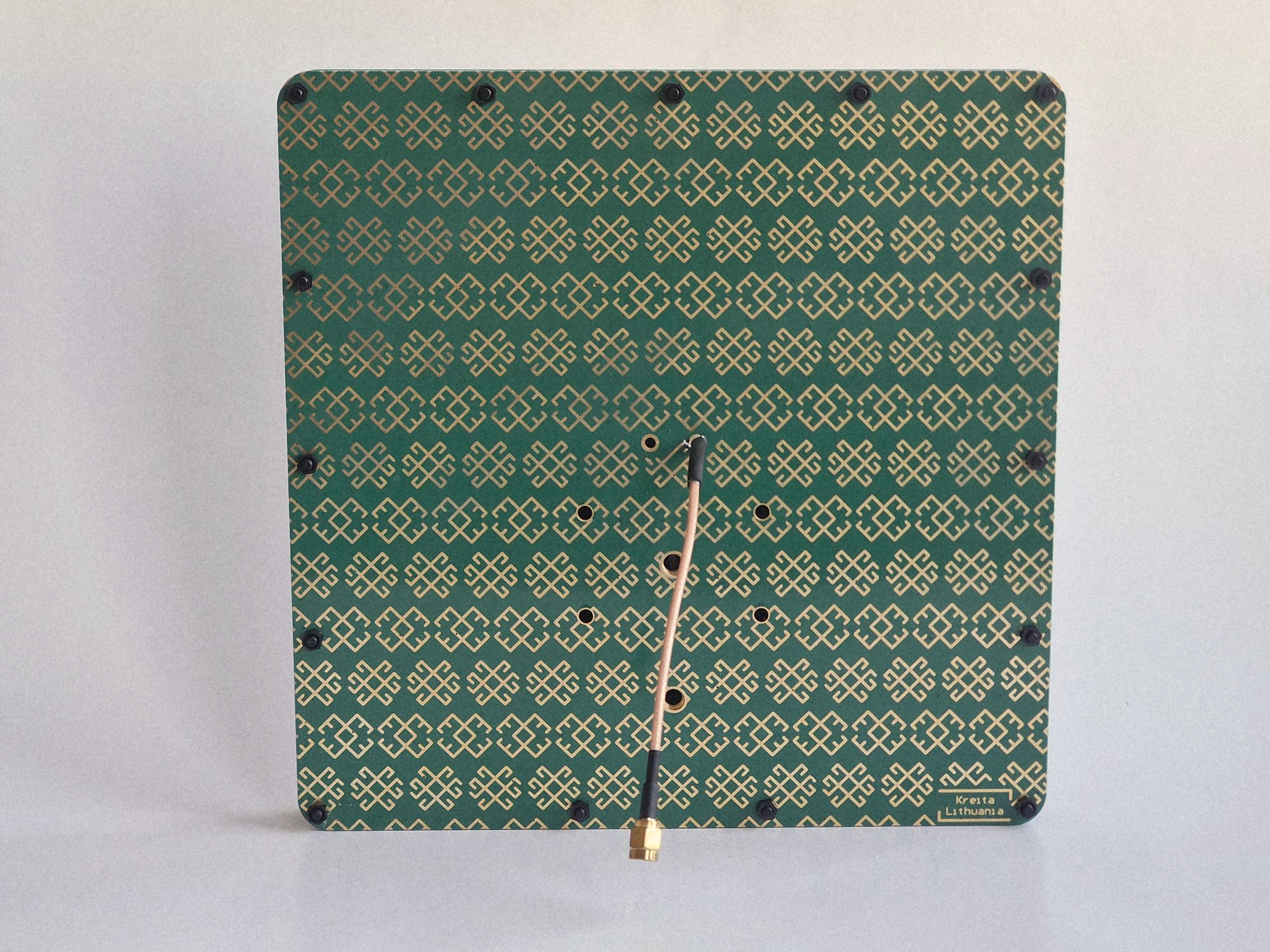
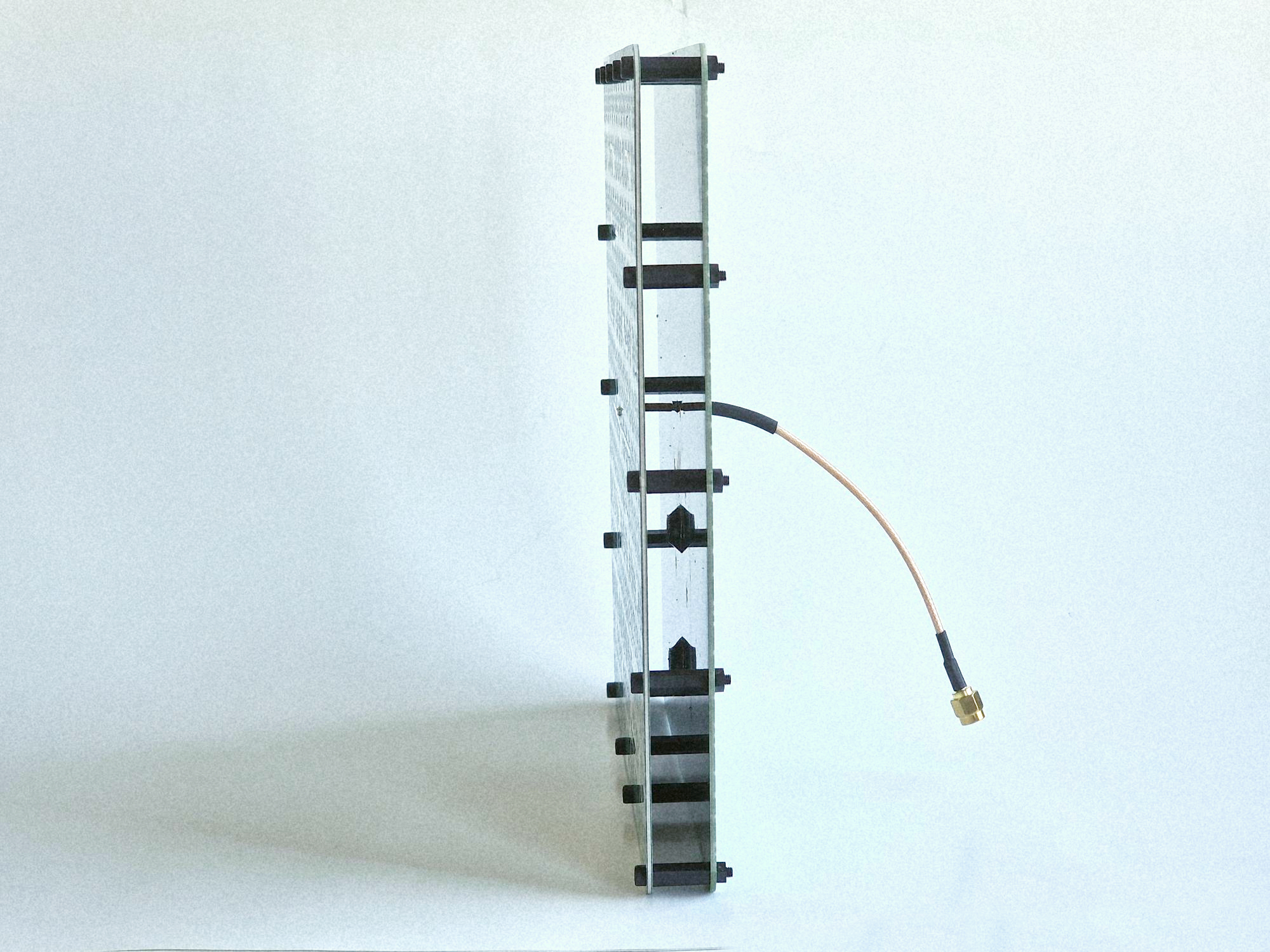
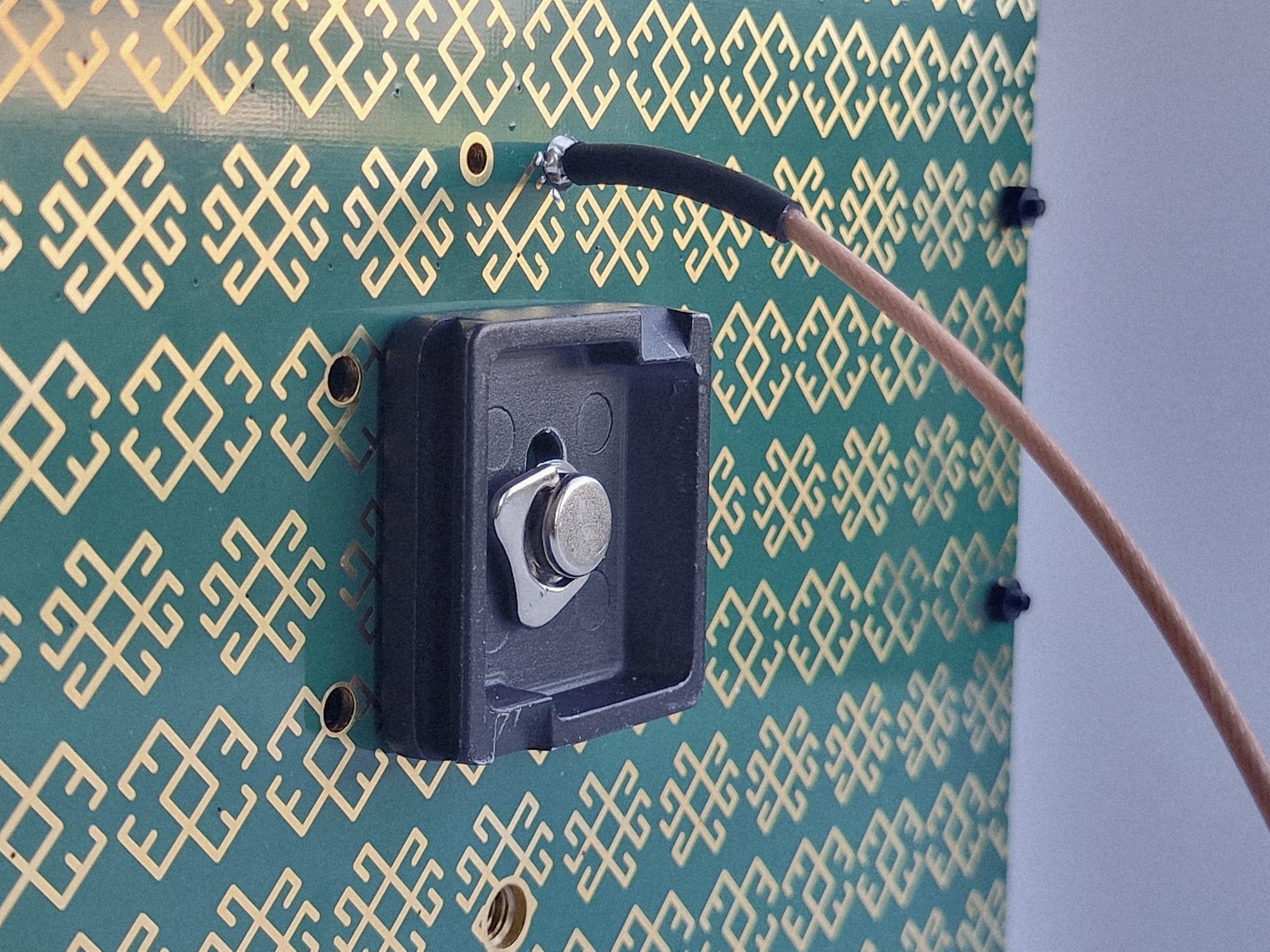
220 × 220 × 18.2 mm PCB-based planar design achieves 19 dBi gain in a lightweight, low-profile package. Built-in 1/4-inch tripod thread and M6 screw mount provide flexible deployment options.
High gain and narrow beamwidth make the EGLE-64C-R well suited for point-to-point relay nodes and repeater installations where maximizing SNR over line-of-sight links is the priority.
Complete RF and mechanical specification of the EGLE-64C-R antenna system.
| Frequency Range | 5.0 – 6.2 GHz |
| Antenna Gain | 19 dBi @ 5.8 GHz |
| Polarization | RHCP (Right-Hand Circular) LHCP available as EGLE-64C-L |
| Impedance | 50 Ω |
| Half-Power Beamwidth | 11.2° (measured @ 5.8 GHz) |
| VSWR | < 2 across most of band (1.306 @ 5.8 GHz, rising to 2.222 at 6.2 GHz band edge) |
| S11 | < −10 dB across most of band (−17.58 dB @ 5.8 GHz, −8.40 dB at 6.2 GHz band edge) |
| Side Lobe Level | −9.7 dB |
| Back Lobe Level | < −30 dB (−33.55 dB @ 5.8 GHz) |
| Dimensions | 220 × 220 × 18.2 mm + cable |
| Weight | 370 g |
| Connector | SMA Male, gold-plated, 150 mm cable |
| Mounting | M6 screw / 1/4″ tripod thread (on demand) |
All performance data measured on calibrated vector network analyzer. Radiation patterns captured in anechoic chamber conditions.
*Side lobe and back lobe levels shown relative to antenna maximum. Path loss and cross-polarization rejection measured between a matched RHCP/RHCP pair and RHCP/LHCP pair respectively, at 3 m separation.
EGLE-64C-R and its LHCP counterpart EGLE-64C-L — front panels, cross-section and tripod-mounted configurations.
Engineering rationale behind the key design choices of the EGLE-64C-R platform.
Linearly polarized antennas operate in a single plane and are best suited for stationary, aligned applications. UAVs and mobile platforms rotate dynamically in 3D space, causing severe polarization mismatch loss with linear systems. The EGLE-64C-R's circular polarization maintains a consistent received signal regardless of vehicle roll, pitch or yaw — eliminating orientation-dependent fades that can break video links or control connections at critical moments.
Omnidirectional antennas radiate equally in all directions, wasting RF energy in directions where it is not needed. Transmitter power is constrained by regulatory limits, heat dissipation and battery capacity. A 19 dBi directional antenna delivers a very large power increase in the focused direction — without touching the transmitter. For long-range FPV, repeater or telemetry links, this gain difference is the margin between a solid connection and signal loss.
The EGLE-64C-R achieves up to −56.98 dB cross-polarization rejection at 5.8 GHz. This serves two purposes: it suppresses interference from equipment operating in opposite polarization in spectrum-congested environments, and it attenuates multipath reflections — since signal reflections from conductive surfaces reverse circular polarization sense, making them naturally rejected by the receiving antenna. The result is cleaner, more reliable links in complex urban or industrial environments.
When the primary system operates RHCP (EGLE-64C-R) and a secondary system uses LHCP (EGLE-64C-L), both links can share the same frequency band simultaneously. The natural polarization isolation — measured between −45 dB and −57 dB across the band — acts as an additional layer of spectral separation beyond channel spacing, enabling higher density UAV operations or simultaneous uplink and downlink on the same frequency without co-channel interference.
Optimized for scenarios where link reliability and range are operationally critical.
High-gain ground station antenna for long-range FPV racing and freestyle. Maintain crisp video at extended range where standard antennas fail.
Fixed directional antenna for professional UAV command and control links. Tripod-mount and built-in 1/4″ thread enable stable, precision-aimed deployment.
Point-to-point and point-to-multipoint relay nodes benefit from the high gain and narrow beam for maximizing SNR on line-of-sight links over distances.
Reliable uplink/downlink for MAVLink telemetry, RTK correction data and sensor payload offload where omnidirectional link budgets are insufficient.
Available in RHCP (EGLE-64C-R) and LHCP (EGLE-64C-L) variants. Custom mounting configurations and bulk pricing available. Manufactured in Lithuania.